
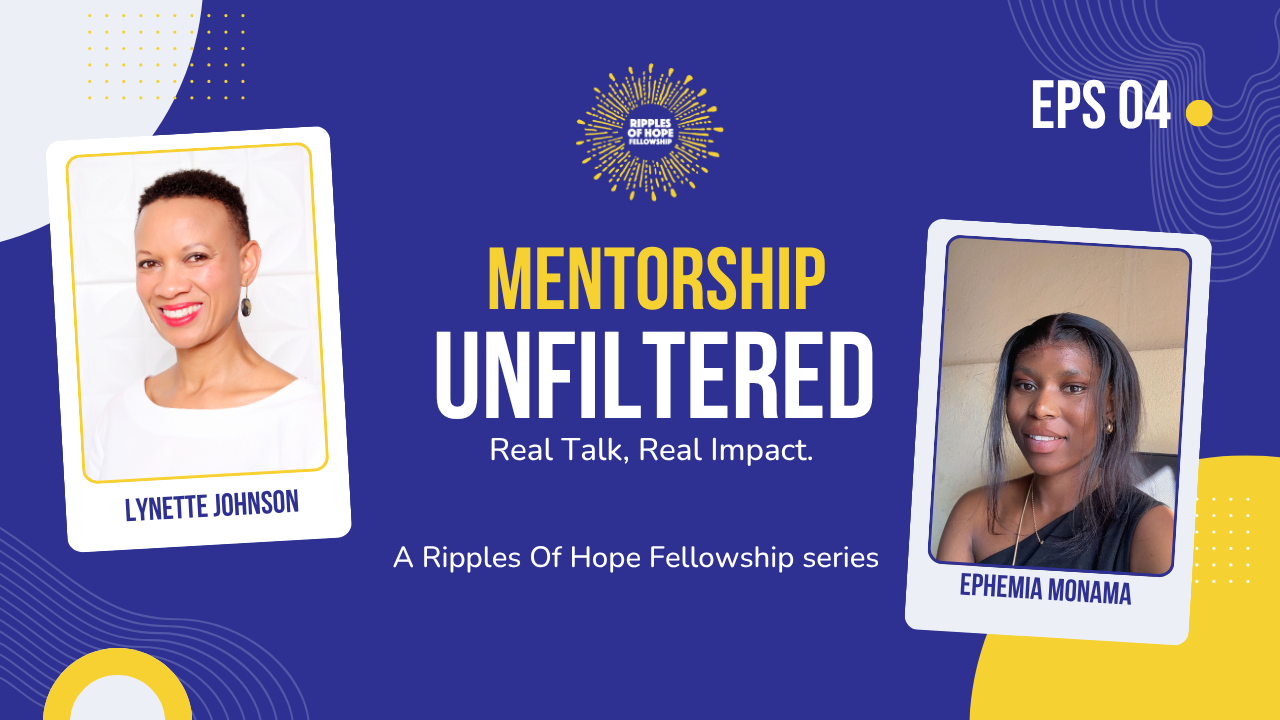
A Question and then a Pause: The Story of Lynette & Ephemia
There are beliefs we carry so long they start to feel like facts. We don't question them. We don't examine them. We just accept them as true and build our lives around their edges.
For Ephemia, that belief was simple: I don't belong.
Not in certain professional spaces. Not in rooms where she'd earned her seat. Not in conversations where her voice mattered. She questioned her worth, second-guessed her contributions, wondered if she was enough.
She didn't know where this belief came from. She just knew it was there, shaping how she showed up, how she spoke, how she saw herself.
Then she met Lynette, and everything changed. Not because Lynette told her she belonged. But because Lynette asked her something no one had asked before.
"Why do you say you don't belong?"
Five words. One pause. A question that would crack open years of unexamined self-doubt and force Ephemia to confront a truth she'd been carrying without question.
When Safety Meets Challenge
From their very first call on October 31, 2024, something felt different between Lynette and Ephemia.
"There was no pressure to perform or impress," Ephemia remembers. "I felt like I could simply be myself."
For Ephemia, who'd approached the mentorship pairing with nervous excitement, that ease was unexpected. Would they connect? Would she feel comfortable being honest about her struggles?
Lynette felt it too. "The conversation felt so natural and free-flowing from the very beginning. We spoke openly, honestly, and from the heart, with a level of vulnerability that made it feel like we had known each other for much longer."
What neither of them knew yet was that this immediate sense of safety would become the foundation for some of the hardest, most transformative conversations of Ephemia's life.
When Ephemia eventually shared that she often felt like she didn't belong, particularly in professional spaces where she questioned her worth, many mentors would have rushed to comfort her. Would have listed her accomplishments, reminded her of her value, convinced her she was wrong to feel that way.
Lynette did something different.
She paused.
Then she asked: "Why do you say you don't belong?"
"That pause was powerful," Ephemia recalls. "It made me realize that she was not going to give me surface-level reassurance, but rather guide me into deeper self-reflection. That conversation marked a turning point for me because it forced me to confront thoughts and beliefs I had carried for years without questioning them."
As Ephemia tried to answer, something uncomfortable became clear: she'd accepted this feeling as fact without ever examining where it came from. Her reasons weren't rooted in reality. They were rooted in old insecurities, fear, and self-doubt that she'd never challenged.
"This question continues to shape how I think about myself because it taught me to challenge negative beliefs instead of accepting them as truth."
The Gift of Shared Context
Lynette and Ephemia are both Black South African women navigating professional spaces. They both understand the specific pressures, the resilience required, the unspoken weight of representation and expectation.
"There are shared realities, challenges, and expectations that come with living and working in our context," Ephemia explains. "We both understand the resilience required, the responsibilities we carry. This shared understanding meant we did not have to over-explain our experiences. Our conversations were grounded in lived reality, which made them more authentic, relatable, and impactful."
For Lynette, that shared context was precisely why she felt so grateful to be paired with Ephemia. "There's a unique sense of understanding that comes from navigating similar social, cultural, and corporate realities as Black women in South Africa," she reflects. "It creates a level of familiarity and relatability that makes our conversations feel more grounded, honest, and authentic."
Lynette grew up without access to the kind of mentorship programs young people have today. This fellowship gave her a chance to become for someone else what she once needed for herself.
"As a South African woman who grew up without access to these programs, this experience has been deeply meaningful. It has shaped me into becoming the kind of person I once needed for someone else."
That shared lived experience meant Ephemia didn't have to translate her reality or justify her feelings. Lynette already understood. And that understanding created space for deeper work.
"I think there's something incredibly powerful about women supporting and pouring into one another," Lynette says. "We understand the complexities of our environment, the challenges we face as Black women, and the resilience it takes to pursue growth and opportunity here."
What Questions Can Unlock
What Lynette gave Ephemia wasn't advice. It was something more valuable: space to question her own narratives.
"She did not impose advice on me but instead asked questions that guided me toward my own understanding," Ephemia says. "That approach empowered me to see my worth and potential from within rather than relying on external validation."
And it worked.
Because a year ago, Ephemia carried "I don't belong" as unchangeable truth.
Today? "Because of Lynette, I now see myself as someone who belongs in every space I enter, someone who is capable, reflective, and deserving of opportunities and growth."
That's not a small shift. That's identity transformation.
For Lynette, the relationship has been equally transformative. "Because of Ephemia, I now see myself as someone who has gained a sister for life while still growing and learning along the way. She's reminded me that mentorship isn't about having all the answers, but about showing up authentically and being willing to support others through shared experiences."
Building Sisterhood
When asked to describe each other in one word, both women chose carefully.
Ephemia chose: Safe.
"Lynette creates an environment where I feel comfortable expressing myself without fear of judgment. That sense of safety allowed me to be vulnerable and honest, which is essential for real growth."
Lynette chose: Open-hearted.
"She's been emotionally present and easy to connect with since day one."
Safety and openness. Two qualities that, when brought together, create the conditions for real transformation.
Their relationship has extended far beyond formal mentorship sessions. They've laughed together about how serious they both can be, how they replay conversations and analyze things deeply. They've leaned into correction with grace. Ephemia receiving feedback about communication and time management with maturity, Lynette embracing vulnerability in new ways.
"There were moments where we had honest conversations around accountability," Lynette recalls. "What stood out was her willingness to receive that feedback from a place of love, reflect on it, and intentionally improve. That level of self-awareness is incredibly admirable."
And Ephemia has noticed something shifting in herself: "I have adopted from Lynette the ability to listen fully before responding. She models patience and thoughtfulness. I now pause more, reflect more, and respond with intention rather than reacting emotionally."
What They're Building
When asked where they see this relationship going, both are emphatic: this extends far beyond the fellowship.
"What we've built goes beyond a formal mentorship program. It's a genuine connection rooted in love for one another, sincerity, and mutual respect," Lynette says. "I'll be intentional about keeping in touch, making time for us to connect, and continuing to offer support. I think we're building a lasting sisterhood, and I'm excited to see how we continue to pour into one another over time."
Ephemia agrees. "What we are building is not just a mentorship but a lasting relationship that will continue to influence how I see myself, how I grow, and how I show up in the world."
That's Ubuntu in practice: I am because we are. Two South African women, one who grew up without access to mentorship, one navigating the complexities of young professional life, finding each other through a fellowship committed to building beloved community.
The Ripple Effect
A year ago, Ephemia accepted "I don't belong" as fact.
Today, she walks into spaces knowing she does. Not because someone told her, but because someone asked her why she thought she didn't, then held space while she found her own answer.
Lynette became the mentor she once needed. Ephemia found the courage to challenge beliefs she'd carried for years. Together, they built a sisterhood rooted in safety, honesty, and the willingness to ask hard questions.
And it all started with a pause, a question, and the refusal to offer easy comfort when deeper truth was what was needed.
"Why do you say you don't belong?"
Sometimes the most transformative gift isn't an answer.
It's the question that forces you to find your own.
Lynette and Ephemia are part of the Ripples of Hope Fellowship, which connects young leaders from South Africa and the United States through mentorship, immersive experiences, and a shared commitment to building beloved community.