
Standing at the Wall: What Two Fellows Learned in Montgomery
by Thando Mzimela | Ripples of Hope Fellowship
There's a wall in Montgomery, Alabama, massive, towering two stories high, covered in names. Thousands upon thousands of last names, each one representing families torn apart by slavery, lives reduced to property, humanity stolen.
When Jailen Leavell typed his surname into the database at the Legacy Museum, he didn't expect to find anything. Leavell isn't Smith or Johnson. It's not that common.Surely, his lineage wouldn't be there.
But it was.
"It took the breath out of me," Jailen recalls. "Like, what? Someone connected to me, one of my ancestors, is on this wall because they were once enslaved. It was like all of the puzzles, that final piece of the puzzle."
For Jailen and Daunte, two 2026 Ripples of Hope Fellows, the 2026 Lekgotla trip to Montgomery wasn't just a history lesson. It was a reckoning.
Meeting History Face-to-Face
Neither fellow had much of a personal relationship to Montgomery before receiving the invitation from Ripples partners to join the leadership lekotla. The trip centered on the Equal Justice Initiative (EJI), the organisation founded by Bryan Stevenson, whose work freeing wrongly convicted prisoners was immortalised in the film Just Mercy.
The first day moved quickly. After arriving, the group went straight to the Legacy Museum and straight to Bryan Stevenson himself. He told them about visiting death row as a young lawyer, the beginning of a career that would see him free 140 people who were innocent or wrongly convicted.
Then they entered the museum.
What struck Daunte immediately was the silence. "It was very quiet, but there was nothing to say. People were just taking it in. Everyone was in their own personal space, white or black, just learning, just absorbing."
The museum doesn't ask visitors to simply read about slavery and mass incarceration, it makes them witness it. There are jail cells with holograms of enslaved people in chains, telling their stories. There are telephones connected to screens where wrongly convicted prisoners recount how they ended up on death row, deliberately designed to mimic a prison visit.
"You're behind the glass, talking to them on the phone, and they're telling you their story," Jailen explains. "It made it real, because other people are still being affected by it."
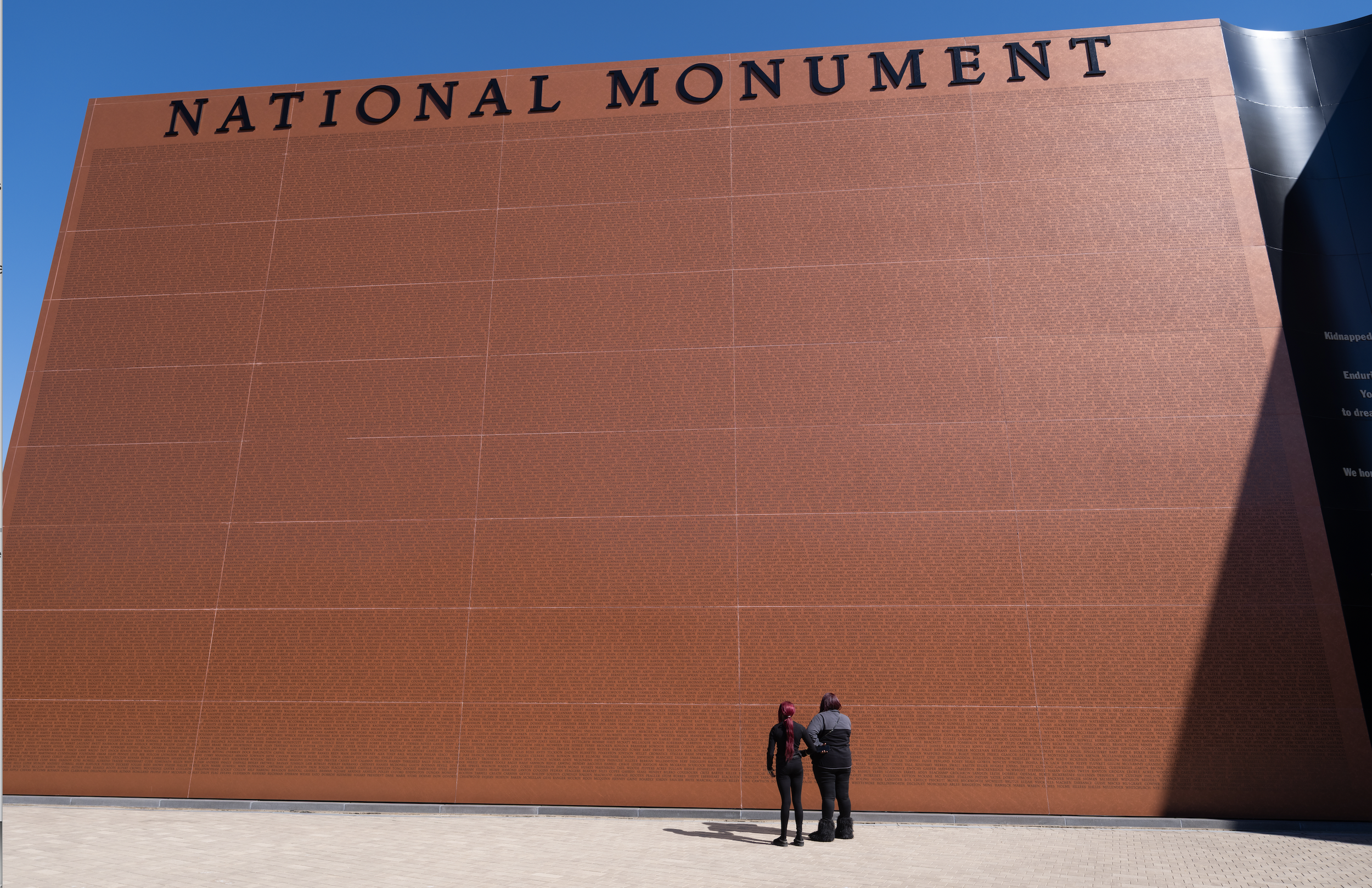
Photo by John Werner
Names That Demand to Be Remembered
At the National Memorial for Peace and Justice, the lynching memorial, Jailen encountered something that shook him. The memorial honours more than 4,400 Black Americans lynched between 1877 and 1950, with each county represented by a steel monument engraved with victims' names.
Seeing Kentucky counties represented, recognising the towns, realising people were lynched in places he knew and had never heard about it, that hit differently.
"I wish I would have wrote those names down to document it and publish it here in Kentucky," he reflects. "Because it's just not something that's known or broadcast."
But it was the database wall, listing the last names of enslaved people that completed the circuit for Jailen. When the guide looked up "Leavell " and found it, Jailen stood there, staring at his family name among thousands of others.
"Someone connected to me sacrificed their lives in horrific conditions for me to be here," he says. "That was the full circle moment."
Hope in the Work
Montgomery isn't only about grief and rage. It's also about what's possible when someone decides to tell the truth and build from there.
Bryan Stevenson didn't just create a museum. He created an economic engine for Montgomery, providing jobs, reinvesting in the community through hotels, health clinics, libraries, and cultural programming.
"You go in this museum, you hear and learn about this horrible thing that happened to African Americans," Jailen observes. "But this horrible thing, 50, 60 years later, is a story that's being told, and it's changing people's lives financially. That was hope."
For Daunte, it sparked a question he's still sitting with: "How can I help the next generation? How can I help my community?" He doesn't have all the answers yet. But he knows the question matters.
"It's all about finding the community to do it, or even starting my own," he says. "That's the next step for me."
Ubuntu & Community
Throughout the trip, Daunte and Jailen, the youngest people there found themselves in conversations with leaders from across the South. One woman, Valerie, stood out, recently retired, she was now focused on teaching marginalised communities about generational wealth.
On what should have been a late night, she stopped them. "Everyone was going up. She went in the elevator going down and was like, 'Jailen and Daunte, you guys gotta come. We didn't finish our conversation.'"
They talked for over an hour and a half. She was exhausted, but she gave them her time. "The one thing you can't get back in life is time," Jailen reflects. "And she gave us her time just to go deeper, to set a framework."
It was Ubuntu in action: I am because we are.

Jailen (left) and Daunte (right) with Ms. Doris Crenshaw, lifetime community activist from Montgomery and Founder/CEO of The Southern Youth Leadership Development Institute
Carrying It Forward
Watching Jailen stand at that wall, staring at his family name, Daunte having had a similar experience at the wall, had a realisation: "We're all not that different at all. We all come from the same place, and it's not that far away."
For Jailen, seeing "Leavell " on that wall was more than personal discovery. It was responsibility. "When we talk about Ubuntu, it's like this person sacrificed their lives in horrific conditions for me to be here."
The experience didn't just reaffirm their commitment, it deepened it.
"It lit a new fire in me," Jailen says. "To speak more boldly and loudly about the injustice in our prison industrial complex."
For Daunte, the trip was "reflective and inspiring, it reminds you where Black people in America started. And you look where we are now. But there's things that need to change. And it starts with us, with the people who are living now, for the next people."
A month later and both fellows are still processing what they witnessed. And they're not carrying it alone. That's the point of Ubuntu. That's the point of Ripples.
"Everyone on that trip has definitely grown," Daunte reflects. "It sparked deep conversation, uncomfortable conversations, but made to grow."
Because at the end of the day, as Jailen learned standing at that wall: I am because we are.
And the names on that wall demand that we remember. That we act. That we build something worthy of their survival.
Daunte Pean and Jailen Leavell are 2026 Ripples of Hope Fellows committed to community development, storytelling, and social justice advocacy. Learn more about Bryan Stevenson and his work building the Equal Justice Initiative at eji.org.